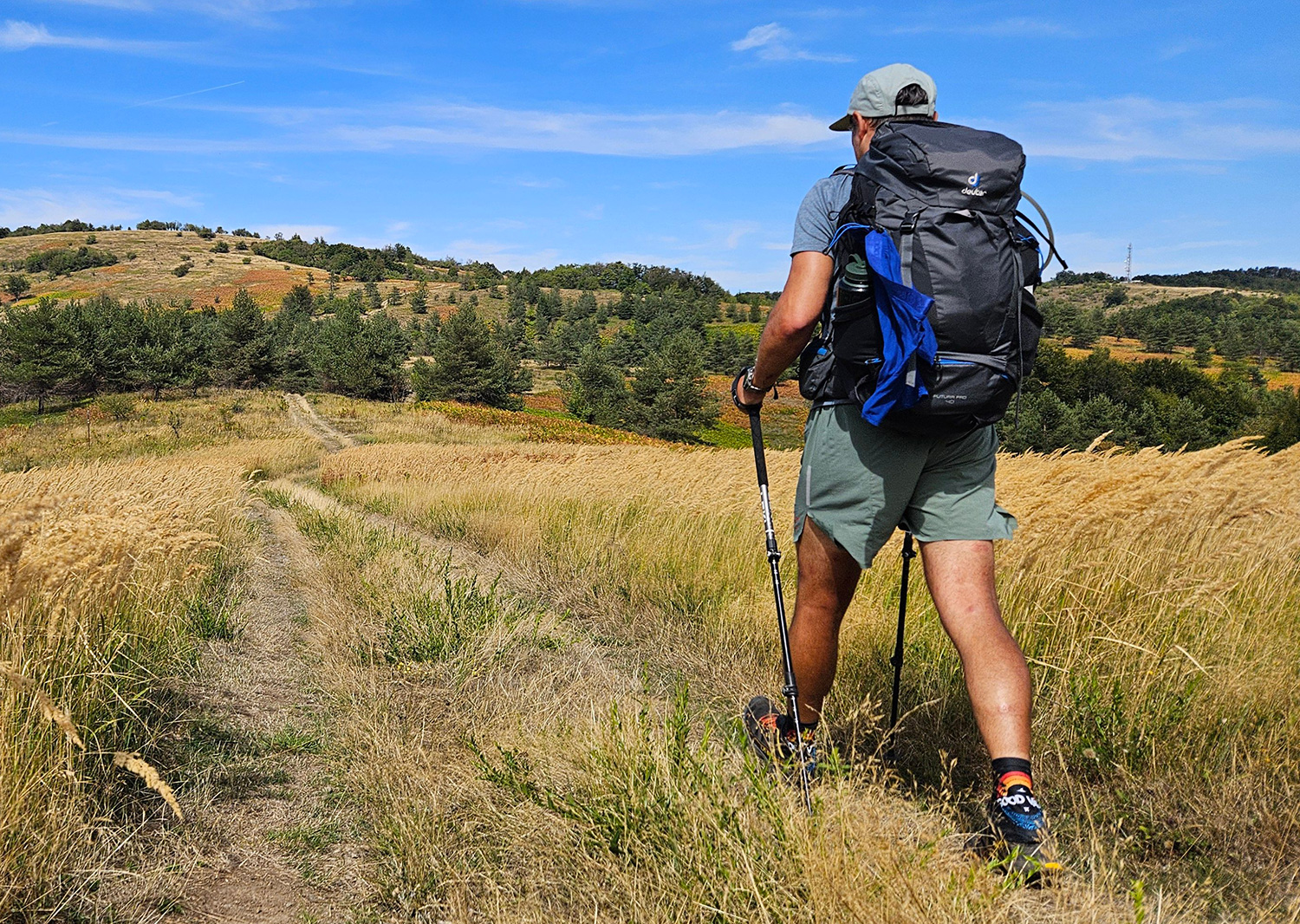
There is a different way to experience Tuscany. Slower, quieter, made up of footsteps, encounters, and landscapes that change at an unhurried pace. It is the Via Francigena, the ancient pilgrimage route that for centuries connected Northern Europe to Rome, crossing villages, countryside, and rolling hills.
Although Montespertoli is not located directly on the official Via Francigena route, it lies close to some of the most fascinating sections of the Tuscan pilgrimage trail, including those between San Miniato, Gambassi Terme, and San Gimignano.
Among white roads, vineyards, Romanesque churches, and charming medieval villages, this area still preserves the authentic atmosphere of Europe’s great pilgrimage routes.
The Via Francigena in Tuscany
The Tuscan section of the Via Francigena is widely considered one of the most beautiful stretches of the entire European route. Its stages cross iconic landscapes of rolling hills, cypress-lined roads, olive groves, and historic villages where time seems to slow down.
Montespertoli is an excellent base for exploring the surrounding countryside, enjoying scenic walks and discovering places that have been connected to the pilgrimage route for centuries.
To learn more about the official Via Francigena route:
👉 www.viefrancigene.org

Routes to explore near Montespertoli
From San Miniato to Gambassi Terme
One of the most popular stages of the Via Francigena in Tuscany crosses woodlands, Romanesque churches, and gentle hills before reaching Gambassi Terme. This route is appreciated for its authentic atmosphere and the beautiful scenery that accompanies walkers throughout the day.
Among its highlights are the Pieve di Coiano and the Pieve di Chianni, ancient churches that once offered shelter and rest to medieval pilgrims.
More information about the official route:
👉 viafrancigena.visittuscany.com
From Gambassi Terme to San Gimignano
This stage is often regarded as one of the most scenic sections of the entire Via Francigena in Tuscany. The trail winds through vineyards, olive groves, and panoramic country roads before revealing the famous towers of San Gimignano on the horizon.
Along the way, visitors can also discover the Sanctuary of Pancole and the historic Pieve di Cellole, both immersed in the peaceful Tuscan countryside.
Stage details:
👉 viafrancigena.visittuscany.com

Walks and trails around Montespertoli
Even without walking the Via Francigena itself, the Montespertoli area offers countless opportunities for nature walks and hiking through the hills of the Florentine Chianti region.
The white roads that cross vineyards, olive groves, and small villages allow visitors to experience the same slow and authentic rhythm that has characterized these landscapes for centuries. Popular areas include the routes around Lucardo, Montegufoni, and the countryside stretching between Florence and the Val d’Elsa, ideal for walking, cycling, or simply enjoying a peaceful day outdoors.
Guests staying at Montalbino can also easily reach historic towns such as Certaldo, San Gimignano, and Volterra, combining panoramic walks, food and wine experiences, and visits to some of Tuscany’s most authentic destinations.
Information and local itineraries:
👉 visitmontespertoli.it
To discover experiences, villages, and activities around Montalbino:
👉 agriturismomontalbino.it/en/experiences/

Interesting facts about the Via Francigena
A route more than one thousand years old
The Via Francigena was not originally a single road, but rather a network of routes used during the Middle Ages by pilgrims, merchants, and armies travelling to Rome from Northern Europe.
The name “Francigena” literally means “the road coming from France”, although the journey actually began in Canterbury, England.
Archbishop sigeric’s travel siary
One of the most important historical documents related to the Via Francigena is the travel diary of Archbishop Sigeric of Canterbury, who, in the 10th century, recorded the 79 stages of his return journey from Rome.
To this day, his diary remains the main historical reference used to reconstruct the official route of the Via Francigena.
Medieval pilgrims
Pilgrims travelling along the Via Francigena were often recognizable by their walking staff, cloak, and shoulder bag. Along the route, hospices and shelters provided places to rest before continuing the journey.
Many of the ancient Romanesque churches scattered between the Val d’Elsa and the Chianti region once served precisely this purpose.

An experience to enjoy at a slower pace
Those who choose to stay in the Chianti region are often looking for exactly this: the slow rhythm of simple pleasures. A morning walk through the hills, a stop in a historic village, or a glass of wine at sunset after a day spent outdoors.
The Via Francigena is more than a historic route; it is a way of experiencing the landscape. Surrounded by nature, history, and local traditions, the area around Montespertoli still offers visitors the chance to discover an authentic side of Tuscany, where ancient paths and unforgettable views leave a lasting impression.